
Ever been there? Staring at a meticulously crafted plan, every ‘i’ dotted and ‘t’ crossed, while a nagging feeling in your gut screams, “Wrong way!” It’s a familiar conflict: the rational system versus the whispers of intuition. I remember once, years ago, pouring over spreadsheets, convinced a particular investment was a sure thing based on all the data. My gut churned, telling me to walk away. I ignored it. Big mistake. That experience taught me a valuable lesson: systems are great, but they aren’t infallible.
We’re often told to trust the process, to follow established systems. And for good reason – systems provide structure, predictability, and a sense of control. But relying solely on them can blind us to opportunities and potential pitfalls that our intuition might detect. On the flip side, acting purely on gut feeling without any logical framework can lead to impulsive decisions and missed details.
So, what’s the answer? This isn’t about choosing one over the other. It’s about integration. It is about finding a sweet spot where logic and intuition work in harmony, guiding us toward more effective decisions. This article explores how to strike that balance, drawing upon insights and strategies to help you navigate the complexities of decision-making with both your head and your heart.
Defining ‘The System’ and ‘The Moment’
Success often hinges on understanding the interplay between two fundamental forces: ‘the system’ and ‘the moment.’ Discerning when to rely on each is a skill that separates effective decision-makers from those who are merely reactive. Let’s clarify what each entails.
By ‘the system,’ it is meant the established processes, meticulously crafted plans, and accumulated knowledge that guide actions. Systems provide a framework for predictable outcomes. Examples of systems include project management methodologies designed to streamline workflows, financial models used to forecast market trends, and strategic frameworks implemented to achieve long-term organizational goals. These systems are built upon data, analysis, and a desire to minimize risk by following a proven path.
‘The moment,’ on the other hand, represents the power of intuition, the reliability of a gut feeling, and the potential of spontaneous action. It’s about trusting one’s instincts and seizing opportunities that may not be immediately apparent through systematic analysis. Examples of ‘the moment’ manifesting include instinctive reactions during high-stakes negotiations, those flashes of insight that occur during brainstorming sessions, and the ability to pivot strategies on the fly when unexpected challenges arise. Both are valuable tools, but understanding their nature is crucial for success.
The Allure and Pitfalls of Systems
Systems are seductive. They whisper promises of order, predictability, and effortless efficiency. The allure is strong, and rightly so. A well-designed system can be a powerful tool, streamlining processes and mitigating risks in ways that feel almost magical. Think of a finely tuned engine, each part working in perfect harmony to deliver consistent power. That’s the promise of a system.
In my own experience, implementing robust systems has been a game-changer. For instance, a clear system for managing client communication drastically reduced missed deadlines and improved overall satisfaction. The predictability alone was worth its weight in gold, allowing for better resource allocation and reduced stress.
However, the path paved with systems isn’t always smooth. The very rigidity that makes them so effective can also be their Achilles’ heel. A system, by its nature, is designed for a specific set of circumstances. When the unexpected happens – and it always does – that carefully crafted structure can crumble. There was this one situation when a sudden change in market regulations completely derailed our system for product development. We were so focused on following the established procedures that we were slow to adapt, and missed a crucial window of opportunity.
The trap lies in over-reliance. When systems become so ingrained that they stifle creativity and independent thought, innovation grinds to a halt. The human element, the ability to think outside the box and improvise, is often the key to navigating unforeseen challenges. Think of the 2008 financial crisis – a stark reminder of how complex systems, when left unchecked and unquestioned, can lead to catastrophic failures. It’s a delicate balance: harness the power of systems, but never become a slave to them. Always retain the flexibility to adapt, the courage to question, and the wisdom to know when to break free.
The Power and Peril of the Moment
There’s an undeniable allure to acting on a gut feeling, seizing the moment driven by pure intuition. It whispers promises of agility, allowing for quick decisions in a fast-paced world where hesitation can mean missed opportunities. Intuition can be a powerful catalyst for innovation, pushing beyond conventional thinking and unlocking solutions that data alone might never reveal. It acts as a bridge to deeper insights, connecting to a wellspring of knowledge residing below the surface of conscious thought.
However, the same force that fuels breakthroughs can also lead astray. Intuition, unchecked, can morph into impulsivity, resulting in rash decisions with unforeseen consequences. It’s susceptible to biases, those ingrained prejudices that cloud judgment and steer choices down flawed paths. Relying solely on intuition often lacks accountability; when things go wrong, it’s difficult to pinpoint the source of the error and learn from the mistake. I once trusted a gut feeling about a business partnership, dismissing subtle warning signs that, in hindsight, were glaringly obvious. The venture ultimately failed, costing time and resources. Now, while I still value that initial feeling, it is more important to balance it with thorough research and objective advice before making any commitments.
When should you trust your gut? After years of experience, it’s usually safe to rely on intuition when facing familiar situations where you have a proven track record. If it feels like you’re navigating uncharted waters, or if the stakes are exceedingly high, it’s time to bring in the facts, consult experts, and ensure that emotion enhances logic, not replaces it.
Why the Dichotomy is False
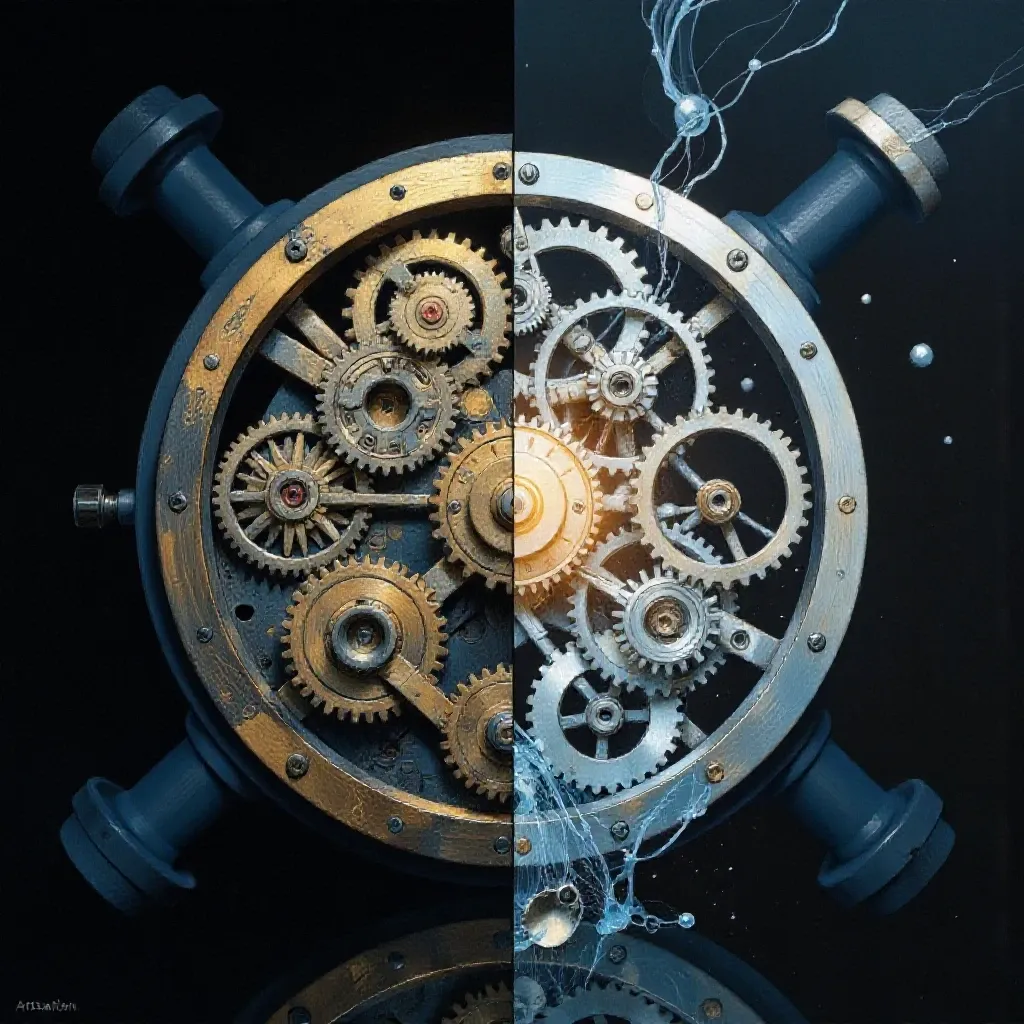
The perceived dichotomy between systematic processes and intuitive decision-making is, in reality, a false one. It’s not an either/or choice where one must exclusively embrace cold, hard data or rely solely on gut feelings. The most effective approach lies in seamless integration, finding the perfect balance to achieve true synergy.
As previously discussed, while systems provide structure and predictability, an over-reliance on them can breed stagnation, stifling innovation and adaptability. Conversely, pure intuition, although powerful, can be volatile and prone to biases, leading to unpredictable and potentially chaotic outcomes. The optimal solution is to harness the strengths of both. By integrating systematic analysis with intuitive insights, individuals and organizations can navigate complex situations with greater accuracy and achieve superior results. This balance offers the best of both worlds, fostering a dynamic environment where data informs intuition and intuition refines systems, leading to a wiser and more effective path forward.

Integrating System and Moment: A Practical Framework
Decision-making becomes more effective when the system (logic and analysis) and the moment (intuition) are integrated. Here’s a framework designed to help refine this integration in a practical way:
- Gather Data (System): Start by gathering information through analysis, research, and focused data collection. Use the strategic framework at your disposal to create a base of solid, verifiable knowledge.
- Cultivate Awareness (Moment): Create space for your intuition. Slow down; quiet the mental chatter. This is about listening to your inner voice, being attuned to physical sensations, and acknowledging emotional responses.
- Assess Alignment (Integration): Does what the analysis reveals line up with gut feelings? If there’s no alignment, that’s not a bad thing—it’s a signal to dig deeper. Ask why the disconnect exists.
- Test Assumptions: All conclusions, whether system-derived or intuition-led, require testing. Design small experiments to test your theories. This provides real-world feedback, clarifying that the chosen path is the right one.
- Iterate (Dynamic): The world changes, and your understanding should too. Continuously re-evaluate decisions based on new data and experiences. Treat every decision as a learning opportunity that will give appropriate ways to achieve goals.
Recognizing Your Intuitive Signals
Intuition speaks in a subtle language. It manifests as physical sensations (a knot in your stomach, a lightness in your chest), emotional responses (a sense of unease or excitement), and moments of sudden mental clarity. For example, when faced with a major project, a sense of anxiety was confused with intuition, but when I took the time to carefully analyze the components, my intuition kicked in. It was accompanied by a calm feeling, signaling me to move faster on specific aspects and slow down on other ones. With practice, intuition becomes more clear. It’s all about learning to differentiate between fear and a genuine intuitive hit.
Using Systems as a Foundation for Intuition
Intuition isn’t magic; it’s informed pattern recognition. It thrives on a foundation of knowledge and data. The more intimately you understand a process or system, the more effective your intuition becomes within that realm. Once a project was facing constant failures and was on the verge of being shut down – until my team decided to establish a robust system. With a concrete system in place, my intuition became enhanced to the point where I could anticipate future bottlenecks and make critical decisions. The result was that the project was not only rescued, but it became notably profitable.
Real-World Examples
The interplay between a well-defined system and the seizing of the moment isn’t just theoretical; it’s a practical approach that fuels success across various domains. Observing how these principles manifest in everyday scenarios highlights their profound impact.
Business Management: Consider a retail business with a system in place for managing inventory. This system dictates ordering patterns, storage protocols, and sales tracking. However, a sudden surge in demand for a particular product, perhaps triggered by a celebrity endorsement, represents a “moment.” A manager who rigidly adheres to the system might miss this opportunity, leading to stockouts and customer dissatisfaction. Conversely, a manager who recognizes the moment and overrides the standard ordering procedure to procure more of the in-demand product demonstrates the power of balancing system and moment. They leverage both for optimal results.
Tech Industry: In the fast-paced world of software development, agile methodologies represent the “system.” These methodologies emphasize iterative development, collaboration, and continuous improvement. However, a critical bug discovered just before a major product launch constitutes a “moment.” While the system dictates following the established testing and release protocols, a development team must sometimes deviate from the plan. They might need to dedicate extra resources to fixing the bug, potentially delaying the launch slightly. This is to avoid a catastrophic product failure. Effectively integrating the system with the urgency of the moment ensures both product quality and timely delivery.
Personal Experiences: The system vs moment dynamic also plays out in personal lives. Someone committed to a healthy eating system might diligently plan their meals and track their calorie intake. However, an unexpected invitation to a celebratory dinner with friends presents a “moment.” Rigidly sticking to the diet plan might lead to social isolation or feelings of deprivation. A balanced approach would involve enjoying the dinner, perhaps making slightly healthier choices within the context of the celebration. They can adjust the system later to account for the deviation. This flexible integration of system and moment fosters both well-being and fulfilling social connections.
These varied examples, from business to technology to personal life, illustrate that effectively managing the tension between a structured system and the spontaneous moment is crucial for achieving optimal outcomes and navigating the complexities of the world.
Conclusion
In summary, mastering the art of people search transcends mere data retrieval; it’s about cultivating a balanced approach. The synergy between systematic investigation and intuitive insight is the key. By integrating rigorous analytical methods with your innate understanding, you unlock a richer, more nuanced perspective.
The most effective decision-making arises from blending rational analysis and intuitive insights. Embrace experimentation; actively incorporate these techniques into your daily life. Trust your capacity to navigate complex situations. Put the advice to work, observe the result, and use them to improve your experiences.